Price per pack of cigarettes: tax…
Screenshot
Cigarette Prices in France Continue to Rise as Part of Anti-Smoking Policy
France — The price of cigarettes in France has been steadily increasing for many years, reflecting the government’s long-term strategy to reduce tobacco consumption and protect public health.
In the French system, the retail price of tobacco products is initially proposed by manufacturers or importers. This proposed price includes production costs, distribution expenses, commercial margins, and mandatory taxes. However, it must be approved by the authorities, particularly the Directorate General of Customs and Indirect Taxes, which verifies that it complies with national regulations.
Once approved, the price becomes official and must be applied uniformly across the country. This means tobacconists cannot set their own prices, offer discounts, or run promotional campaigns on tobacco products.
The final retail price of a pack of cigarettes is made up of three main components: the manufacturer’s share, the tobacconist’s margin, and state taxes. Manufacturers receive roughly 15% of the retail price, while tobacconists typically earn between 8% and 10% for selling the products.
The largest portion of the price comes from taxation. In France, taxes account for approximately 75% to 80% of the final price of cigarettes. These taxes include excise duty and value-added tax (VAT), both of which are regularly adjusted through financial legislation.
Excise duty is calculated mainly based on the quantity of tobacco produced or imported rather than its retail value. The system uses a mixed formula combining a percentage of the retail price with a fixed amount per quantity of tobacco. If the result falls below the minimum tax set by the state, the minimum amount is applied.
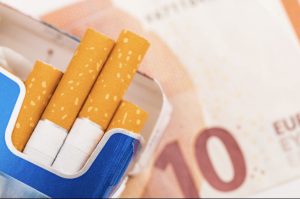
By January 2026, the average price of a pack of 20 cigarettes in France reached around €12.50 to €13, with some brands exceeding €13.50, while cheaper options remain slightly lower.
Over the past two decades, cigarette prices in France have increased dramatically—from around €3 in the early 2000s to nearly €13 today—highlighting the country’s ongoing policy aimed at discouraging smoking.