They Don’t Want Children—Now They Could Be Sent to Therapy? Russia’s Controversial Move Sparks Global Debate
A new set of guidelines introduced in Russia has ignited widespread debate after authorities recommended that women who express a desire not to have children be referred to psychological counseling.
The move is part of a broader strategy by the government to address the country’s declining birth rate, a demographic concern that has intensified in recent years. Officials argue that encouraging a more positive outlook toward parenthood is essential for reversing population decline and ensuring long-term social stability.
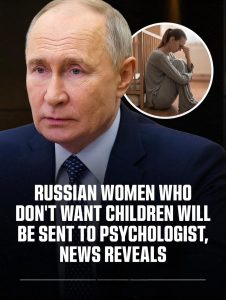
According to the guidelines, women who identify as “child-free” may be directed to speak with psychologists, in what authorities describe as a supportive—not punitive—approach. However, critics question whether such measures blur the line between guidance and pressure, raising concerns about personal autonomy and reproductive rights.
This development follows earlier legislative efforts targeting what has been labeled as “child-free ideology,” signaling a continued shift in state policy toward promoting traditional family values. Observers note that these policies reflect a growing urgency within the government to counter demographic challenges.
The proposal has triggered mixed reactions both domestically and internationally. Supporters see it as a necessary step to combat a shrinking population, while opponents warn that it risks stigmatizing women’s personal choices and undermining individual freedoms.
As the conversation unfolds, the issue highlights a deeper global tension between state interests and personal autonomy—one that is becoming increasingly visible as countries grapple with falling birth rates and changing societal norms.