Bad Bunny, the Son of a Teacher and a Truck Driver, to Headline the 2026 Super Bowl Halftime Show
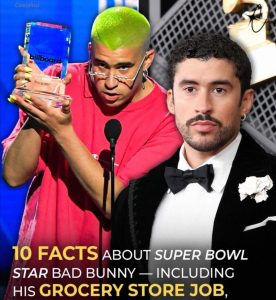
Bad Bunny’s journey to the world’s biggest stage is one of the most unlikely success stories in modern music — and it’s about to reach a historic new peak.
Born Benito Antonio Martínez Ocasio in Vega Baja, Puerto Rico, the global superstar grew up far from stadium lights and red carpets. Raised in a modest household by a schoolteacher mother and a truck driver father, his early life revolved around family routines, church, and simple dreams. A childhood photo of him dressed in a bunny costume — later inspiring his iconic stage name — captures a time when fame was nowhere on the horizon.
Long before chart dominance and sold-out tours, Bad Bunny found his voice singing in his church choir. Those early performances instilled discipline, confidence, and a comfort with self-expression that would later define his career. As a young adult, he balanced university studies with shifts at a grocery store, recording music independently and uploading tracks online with no major label backing.
What happened next changed everything.
His songs began circulating across digital platforms, quietly gaining attention for their raw sound and originality. Without industry connections or a traditional launch, Bad Bunny proved that persistence and authenticity could still break through. That underground momentum eventually led to a breakthrough that transformed him into one of the most influential artists of his generation.
As his fame grew, Bad Bunny became known for far more than music. His chart-topping hits introduced him to global audiences, but it was his refusal to follow expectations that set him apart. From fearless fashion statements to outspoken cultural commentary — and even surprise appearances in professional wrestling — he consistently challenged norms and expanded what a global pop star could be.
Now, with his selection as the 2026 Super Bowl Halftime Show headliner, Bad Bunny’s story comes full circle. From a grocery store employee recording songs on his own to commanding the most-watched stage in the world, his rise reflects a new era of stardom — one built on individuality, cultural pride, and breaking every rule along the way.
And for millions watching next year, this halftime show won’t just be a performance — it will be the latest chapter in one of music’s most remarkable modern success stories.